Produits
Logiciel Desktop
Listes
Logiciel de diagrammes de Gantt
Usages
Cartes mentales pour l'éducation
Cartes mentales pour les entreprises
Cartes mentales pour développement personnel
Bénéfices des Cartes Mentales
Ressources
Fonctionnalités
Éducation
Personnel et Travail
Desktop
Tutoriels vidéos
Voir des conseils et des astuces sur l'utilisation de Mindomo.
Centre d'aide
Guide de l'utilisateur détaillé sur la configuration et l'usage de Mindomo.
Articles
Qu'est-ce qu'une carte mentale?
How to Mind Map?
How to Take Notes with Mind Maps?
How to Prioritize Tasks with Mind Maps?
Qu'est-ce qu'une carte conceptuelle?
Top 29 Exemples de cartes heuristiques
Tarifs
Connexion
Inscription
Produits
Logiciel Desktop
Listes
Logiciel de diagrammes de Gantt
Usages
Cartes mentales pour l'éducation
Cartes mentales pour les entreprises
Cartes mentales pour développement personnel
Bénéfices des Cartes Mentales
Articles
Qu'est-ce qu'une carte mentale?
How to Mind Map?
How to Take Notes with Mind Maps?
How to Prioritize Tasks with Mind Maps?
Qu'est-ce qu'une carte conceptuelle?
Top 29 Exemples de cartes heuristiques
Fonctionnalités
Éducation
Personnel et Travail
Desktop
Aide
Tutoriels vidéos
Centre d'aide
Tarifs
Inscription
Connexion
Catégories :
Tout
par
Marco Bertolini
Il y a 7 années
972
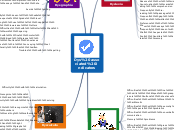
Week 3_Early Indicators
Ouvrir
Dys associated indicators
Dyscalculia
Difficulty using instruments of measurements (propositions, sizes)
Difficulty with time perception
Difficulty in reading graphs and representation of math concepts
Difficulty to differentiate between left and right
Difficulty recalling mathematical formulas
Difficulty to recognize and write numbers
Difficulty with problem solving
Difficulty to recognize and recall maps and 3D shapes
Difficulty with calculation
Dysgraphia
Troubles with spelling
Preference in conveying text orally than written
Difficulties with fine motor skills (tripod grasps, scissors, buttons, shoelaces)
Difficulties with letter and word spacing
Wrong use of capital and lowercase letters
Frequently doesn't write at expected grade level
Avoids writing
Preference of multiple choice over essays and short answers
Absence or misuse of punctuation marks during writing
Misuse of words
Frequent grammatical and syntax errors
Troubles with reading their own handwriting
Dyspraxia
Difficulties with inclusion and peer acceptance
Problems with organizational skills
Usually loses things
Takes longer to respond and reply to actions
Difficulties with gross motor skills (tripping, bumping into things, prone to accidents)
Memory problems
Difficulties with nonverbal communication
Difficulties with geometry and special problems
Is it special or spatial ?
Difficulties with math and arithmetic
Difficulties with fine motor skills (tripod grasp, scissors, buttons, shoelaces)
Dyslexia
Poor auditory short-term memory
Frequently doesn’t read at expected grade level
Preference of multiple choice over essays and short answers
Frequent gap between oral and written grades
Frequently re-reading passages and words
Absence or misuse of punctuation marks during reading comprehension
Absence of spaces between words and sentences
Mirroring of words and letters
Troubles in recognizing common words
Troubles with separating sounds in words
Struggles recognizing letters and making them into sounds
Struggles with learning new words
Troubles in word or rhymes